From Woe to Worship
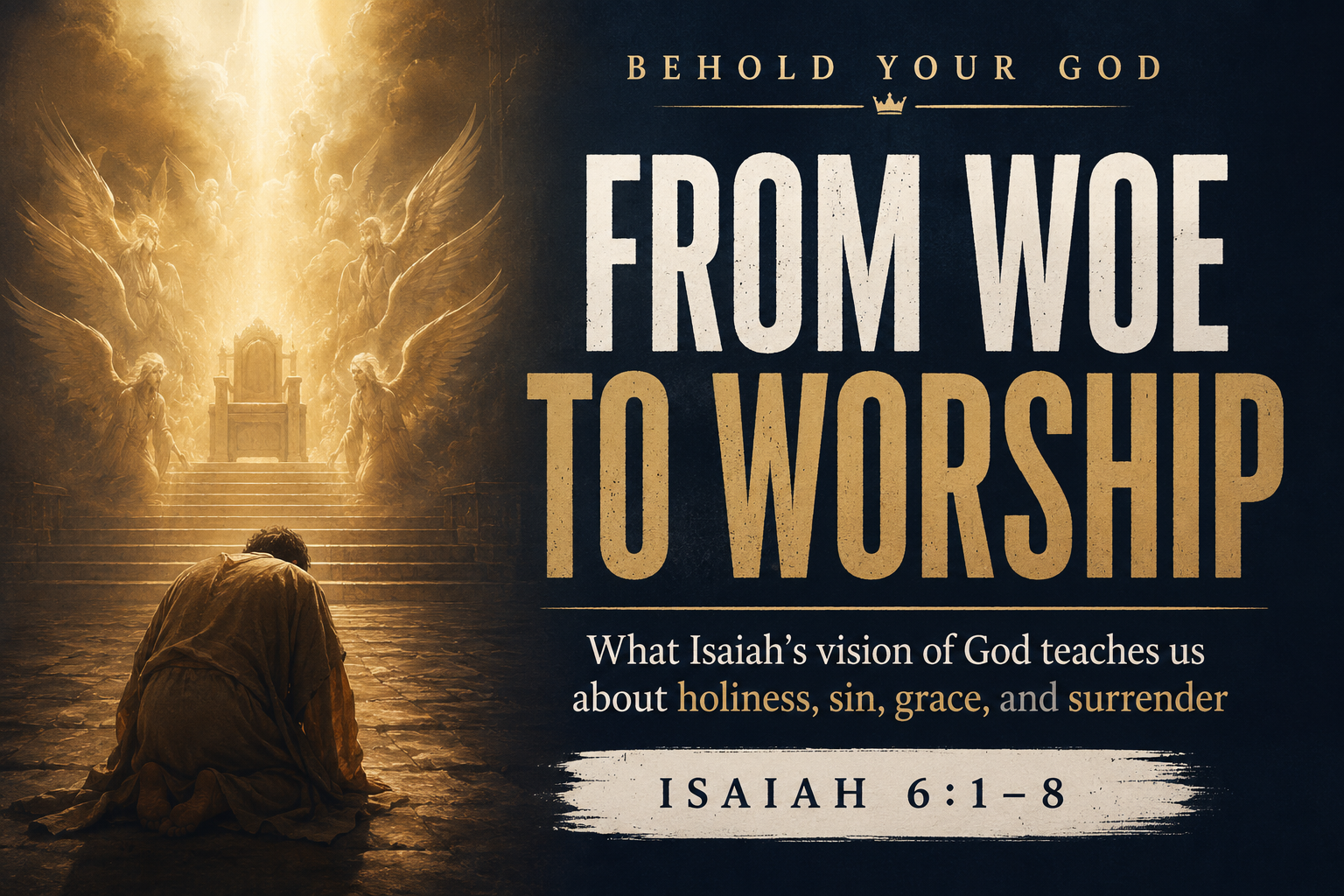
What Isaiah’s vision of God
teaches us about holiness,
sin, grace, and surrender
Sermon Reflection:
Isaiah’s vision in Isaiah 6:1–8 reveals the breathtaking holiness of God, the depth of our sin, and the cleansing grace found only through Christ. This post is based on Pastor Ken’s sermon, “Encountering the Holy God.” Watch the full sermon below.
Seeing God as He Really Is
Our view of God is often shaped more by our feelings, experiences, and culture than by Scripture. We can easily imagine a God who fits our expectations—a God who overlooks sin, adjusts His standards, or exists primarily to affirm us. Isaiah's vision confronts those assumptions.
In the year King Uzziah died, Isaiah saw the Lord seated on a throne, high and lifted up. Earthly kings come and go, but the Sovereign King reigns forever (Psalm 146). His throne stands above every earthly throne, and His glory fills His temple. Even the train of His robe declares His unmatched majesty and dignity.
This is the God Scripture reveals—the eternal King who rules over all.
The Holiness That Changes Everything
Around God's throne stand the seraphim, covering their faces and feet in His holy presence, while continually crying, "Holy, holy, holy is the Lord of hosts; the whole earth is full of His glory."
God's holiness means far more than moral purity. To be holy is to be separate (set apart, sanctified), not the highest of a kind, but a whole other kind. God is high above creature and creation, in a category all His own. He is transcendent. His wisdom, power, righteousness, love, and glory belong to an entirely different category than ours. There is no one like Him.
The seraphim's threefold description of God as "Holy, Holy, Holy" communicates the completeness of God's holiness. His absolute holiness, unmatched by any other. Their worship teaches us something profound. Even sinless heavenly beings acknowledge God's infinite holiness. They do not casually approach Him. They worship with reverence, humility, and awe.
When Isaiah sees God as He truly is, everything else changes.
Seeing Ourselves Clearly
Isaiah's first response is not celebration but conviction of sin. "Woe is me!" "Woe" is a prophetic pronouncement of judgment, cursing, and doom. Standing before the holiness of God exposes the reality of his own sinful heart. Isaiah no longer compares himself to other people. He compares himself to the Holy One.
He confesses that he is a man of unclean lips living among a people of unclean lips (James 3:6-10, Matthew 15:18). God's holiness reveals Isaiah's sinfulness, his guilt, and his complete inability to stand before the Lord on his own. He deserves judgment from the holy God. The same is true for us.
The closer we come to seeing God rightly, the more seriously we take our own sin. Rather than minimizing it or excusing it, we begin to understand the weight of offending a perfectly holy God.
Grace from God's Altar
The story does not end with Isaiah's confession.
One of the seraphim brings a burning coal from God's altar and touches Isaiah's lips. "Your guilt is taken away, and your sin atoned for." The God whose holiness exposes sin is also the God who graciously provides cleansing. Isaiah deserved judgment, but instead received atoning mercy.
That cleansing ultimately points us to Jesus Christ. The sacrifice of Christ is the true altar where our sins are atoned for once and for all. Through His death and resurrection, those who repent and believe are forgiven, declared righteous, and made holy before God (Hebrews 10:10-14).
Before the holy God, we are unclean sinners, worthy of judgment and woe. Atonement for our sin can only come from God's altar, and that altar was the cross of Christ. His sacrificial death is the live coal that atones for our sin and removes our guilt. Glory to God.
We oftentimes want a comfortable God who affirms our sin instead of the holy God who convicts us of sin. But we need to feel the weight of our sin before the holy God and our desperate need for atonement from Him that comes only in Christ. Seeing ourselves in the light of His holiness and feeling deep conviction for our sin leads to a reliance upon His atoning grace that meets our most desperate need.
From Woe to Worship
Only after Isaiah has been cleansed is he ready to answer God's call. "Here I am! Send me." Grace produces willing obedience.
Isaiah does not volunteer because he is worthy. He volunteers because God is worthy and has done for him what he could never do for himself.
The same gospel that forgives us also sends us.
Those who have encountered the holiness of God and experienced His cleansing grace cannot help but worship Him and make Him known.
God has truly turned our woe into worship.
Gospel Connection
Isaiah's vision points directly to Jesus Christ.
Our greatest need is not simply encouragement or self-improvement. Our greatest need is atonement before a holy God.
Jesus, the Holy One, bore God's judgment in our place. Through His perfect sacrifice on the cross and victorious resurrection, He removes our guilt, forgives our sin, and declares all who trust in Him righteous before the holy God.
Only through Christ can sinners stand in the presence of a holy God with confidence instead of condemnation.
Key Takeaways
- God is infinitely holy and completely unlike His creation.
- Seeing God rightly helps us see ourselves honestly.
- Sin cannot be minimized before a holy God.
- God graciously provides atonement for sinners.
- Jesus Christ is the fulfillment of the cleansing pictured in Isaiah's vision.
- God's grace transforms fearful sinners into joyful servants.
- True worship begins with a right view of God's holiness.
Questions for Reflection
- How has your view of God been shaped by culture or personal experience rather than by Scripture?
- What does Isaiah's response teach you about the seriousness of sin?
- Why is it important to understand God's holiness before fully appreciating His grace?
- How does Christ's atoning work give you confidence to approach God?
- In what area of your life is God calling you to respond with, "Here I am. Send me"?
Watch the Full Service
We invite you to watch the full worship service above and hear Pastor Ken’s complete message, “Encountering the Holy God,” from Isaiah 6:1–8.
As you listen, ask God to help you see Him more clearly, recognize the seriousness of sin, and rest in the cleansing grace found in Jesus Christ.
Pastor Ken also recommended R.C. Sproul’s book, The Holiness of God, as a helpful resource for anyone who wants to think more deeply about God’s holiness. Reading it alongside this sermon series can help you continue reflecting on the greatness, purity, and majesty of the God revealed in Scripture.
More from Beyond Sunday