
The Widow’s Mite: Was Jesus Really Teaching Sacrificial Giving?
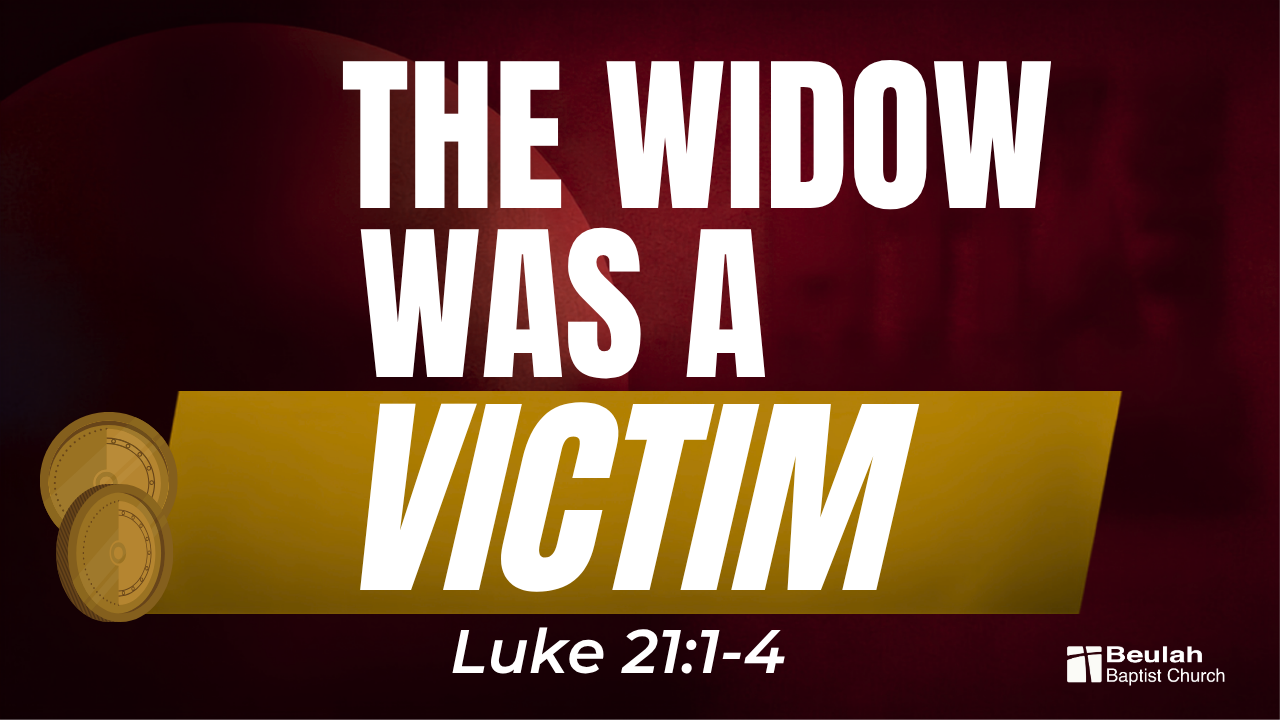
Reading Luke 21:1–4 in the context of Jesus’ warning against religious exploitation
Luke 21:1–4 is commonly presented as a lesson about sacrificial giving. But when we read it alongside Jesus’ warning about religious leaders who “devour widows’ houses” and His coming judgment on the temple, a more troubling picture emerges. In this sermon, Pastor Cameron DeBrew examines whether Jesus was praising the widow’s offering—or exposing the religious system that took everything she had.
The account of the widow’s mite is one of the most familiar stories in the Bible. For generations, Christians have heard it presented as a beautiful example of sacrificial giving. The rich contributed from their abundance, while a poor widow gave everything she had. The familiar application is simple: God is more concerned with the sacrifice behind our gift than with its monetary value. But is that the lesson Jesus was actually teaching?
When we read these four verses by themselves, the traditional interpretation may seem obvious. When we read them within their surrounding context, however, a different and more troubling picture emerges.
Why Is This Story Here?
Luke 21 begins during the final week before Jesus’ crucifixion. Jesus had entered Jerusalem, cleansed the temple, taught the crowds, and confronted the religious leaders who repeatedly attempted to trap Him. Immediately before the account of the widow, Jesus issued a severe warning:
“Beware of the scribes, who like to walk around in long robes, and love greetings in the marketplaces and the best seats in the synagogues and the places of honor at feasts, who devour widows’ houses and for a pretense make long prayers. They will receive the greater condemnation.”
—Luke 20:46–47, ESV
Two sentences later, Jesus saw a poor widow place her final two coins into the temple offering box. Immediately after observing her, Jesus foretold the destruction of the temple. He declared that the impressive structure before them would be torn down until not one stone remained upon another (Luke 21:5–6).
The widow’s story is positioned between Jesus’ condemnation of religious leaders who devoured widows’ houses and His announcement of judgment against the temple. That placement matters.
What Jesus Does—and Does Not—Say
Jesus observed wealthy people placing their gifts into the offering box. He then saw the widow contribute two small copper coins.
He explained that she had given more than the others because they gave from their abundance, while she gave “all she had to live on” (Luke 21:4). That is where Jesus’ explanation ends.
He did not explicitly praise her attitude. He did not command His disciples to imitate her. He did not say that her offering demonstrated saving faith. He did not establish a required percentage for Christian giving. Jesus simply described what happened: the wealthy retained plenty after giving, but this destitute widow surrendered her entire livelihood.
This does not prove that her heart was insincere. She may have acted from sincere devotion. The passage simply does not tell us her motivation. Its emphasis is on what the religious system took from her.
She Was Being Devoured
Jesus had just condemned religious leaders for devouring widows’ houses. The widow then became a visible example of what that condemnation meant.
God’s law repeatedly commands His people to defend widows, orphans, the poor, and others who are vulnerable. Isaiah 1:17 instructs God’s people to “bring justice to the fatherless” and “plead the widow’s cause.” Exodus 22:22 warns, “You shall not mistreat any widow or fatherless child.”
The religious leaders should have cared for this woman. Instead, the system operating under their authority accepted the last two coins she possessed. She entered the temple poor and left completely destitute. Seen within this context, the account is not primarily a celebration of a religious institution receiving a sacrificial offering. It is an indictment of a corrupt system that took everything from someone it should have protected.
False Religion Still Preys on the Vulnerable
The danger Jesus exposed did not disappear with the destruction of the Jerusalem temple. False teachers still manipulate people by promising that financial gifts will secure God’s healing, blessing, prosperity, or favor. Those who are sick, lonely, frightened, or financially desperate are often the easiest targets.
They are told to demonstrate their faith by sending money. They are promised that a “seed offering” will obligate God to return health or wealth to them. Meanwhile, religious personalities build extravagant lifestyles from the contributions of those who can least afford to give. Jesus’ warning remains urgent: beware of teachers who wrap greed in religious language and use the name of God to exploit vulnerable people.
Faithful Christians should examine every teaching—including the teaching they receive from trusted pastors—against the Word of God. Scripture, not charisma, celebrity, emotional appeal, or promises of prosperity, is our final authority.
True Religion Protects Rather Than Exploits
James describes genuine faith very differently:
“Religion that is pure and undefiled before God the Father is this: to visit orphans and widows in their affliction.”
—James 1:27, ESV
True religion does not grow wealthy by manipulating the poor. It serves them. It does not devour widows’ houses. It cares for widows in their distress. Churches should never use guilt, fear, or promises of divine favor to pressure people into giving. Christian generosity must flow from grace rather than manipulation.
Believers give generously not because we can purchase God’s blessing, but because God has already given us a gift beyond measure in Jesus Christ.
Salvation Cannot Be Purchased
The widow’s offering could not earn her salvation, and neither can our religious works. Jesus lived the perfect life we could never live and died the death our sins deserve. Through His death and resurrection, He provides salvation as a gift to everyone who repents and trusts in Him.
When we stand before God, our giving records and religious accomplishments will not make us worthy of heaven. Our only hope is the righteousness of Jesus Christ. Those who belong to Christ are clothed in His righteousness. We do not obey, serve, love, or give in an attempt to purchase salvation. We do these things because salvation has already been freely given to us through Christ. We love because we have received extraordinary love. We give because God has given generously to us. We serve those in need because Christ showed mercy to us when we were spiritually helpless.
That is the difference between the gospel and false religion. False religion demands payment while promising blessing. The gospel announces that Christ has paid the price and offers salvation by grace.
Questions for Reflection
- Have you generally understood the widow’s offering as an example of sacrificial giving? How does its surrounding context affect your understanding?
- Why is Jesus’ warning that the scribes “devour widows’ houses” important to interpreting Luke 21:1–4?
- What are some ways religious teachers still manipulate vulnerable or desperate people?
- How can Christians evaluate whether a teacher’s message is faithful to Scripture?
- What practical steps can our churches take to protect and care for widows, orphans, the poor, and others who are vulnerable?
- Is your relationship with God based on your religious performance or on the righteousness of Jesus Christ?
Go Beyond Sunday
Read Luke 20:45–21:6 as one continuous passage. Notice what Jesus says about the religious leaders, what happens to the widow, and what He predicts concerning the temple.
Ask God to help you recognize teaching that uses fear, guilt, or promises of prosperity to manipulate people. Consider one practical way you can help protect or care for someone who may be vulnerable.
Watch the complete sermon above.
Plan your visit:
https://www.beulahbaptist.com/new
Watch more sermons:
https://www.beulahbaptist.com/sermons
More from Beyond Sunday