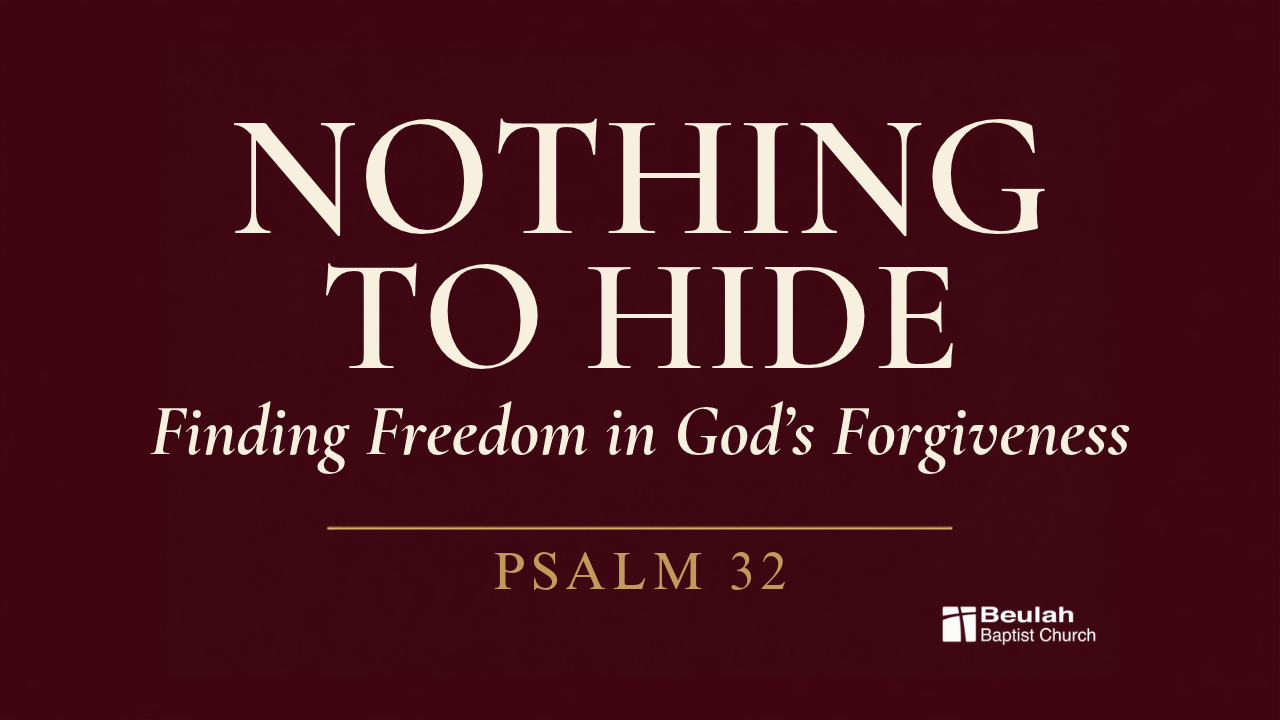
Nothing to Hide: Finding Freedom in God's Forgiveness
We are remarkably good at hiding our sin. Sometimes we conceal it from other people. Other times, we give it a more acceptable name, explain it away, or compare ourselves to someone whose behavior seems worse than ours. We call it a mistake, a weakness, or simply the way we are. But changing what we call sin doesn't change what it is before a holy God. Psalm 32 reminds us that the question isn't what we choose to call our sin. The question is what God calls it.
David understood both the burden of concealed sin and the joy of being forgiven. He knew what it was like to resist God's conviction, and he knew the freedom that came when he finally confessed. His experience teaches us something we all need to hear: we cannot hide our sin from God, but we can find forgiveness in Him. And the blessing David celebrates is available to sinners like you and me through Jesus Christ.
WATCH THE SERMON
The Greatest Blessing We Could Receive
Psalm 32 begins with David celebrating the forgiveness of sin. He describes the person whose transgression is forgiven, whose sin is covered, and against whom the Lord counts no iniquity. These words remind us that our sin is not a minor matter. Transgression is rebellion against God, sin falls short of His standard, and iniquity describes what is crooked and wrong within us. Yet David rejoices because the very God against whom he sinned has forgiven him.
We often think of blessings in terms of our families, health, homes, jobs, and the things God has provided. We ought to be thankful for all of them. But none can compare to knowing that a holy God has forgiven our sin. We can have everything this world considers important and still have a problem none of those things can solve. David wants us to understand that forgiveness is a blessing greater than anything we could accumulate.
God's forgiveness does not mean He has become less holy or that sin no longer matters. Psalm 130:4 reminds us that forgiveness should deepen our reverence for God. The more clearly we understand His holiness, the more seriously we ought to take our sin. Growing in our relationship with Christ should make us more sensitive, not less sensitive, to the things in our lives that displease Him.
The Burden of Sin We Refuse to Confess
In Psalm 32:3–4, David describes what happened when he kept silent about his sin. His strength was drained, and he felt the weight of God's hand upon him. Although we cannot say with certainty when David wrote this psalm, many commentators connect it with the experience behind Psalm 51, following his sin involving Bathsheba and Uriah. David had the power and resources of a king, but he could not hide what he had done from God. He could not escape the conviction that came with his refusal to confess.
We can recognize that same struggle in our own lives. We know what God's Word says, but instead of confessing our sin and turning from it, we find ways to justify it. Sometimes we simply don't want to give it up. And it isn't always some terrible secret that nobody else knows. It may be the way we speak to our family when we're frustrated, resentment toward someone who hurt us, gossip disguised as concern, or sinful thoughts we allow to linger.
We are very good at giving sin another name. We call it a mistake or a weakness. We say everyone else is doing it, or we excuse our behavior because of what someone else did to us. Sometimes we compare ourselves to another person and feel better because we haven't done what they have done. But God doesn't measure our sin by comparing us with other sinners. He measures it according to His own holiness.
We also need to understand that not every hardship or sickness is God's discipline for a particular sin. But David makes clear that his suffering was connected to his refusal to confess. God had not abandoned David; He was still dealing with him. Sometimes we know God is confronting us through His Word, a sermon, a godly friend, or the conviction of the Holy Spirit. The question is whether we will respond or keep resisting Him.
Confession Opens the Way to Forgiveness
Everything changes in Psalm 32:5. David stops trying to cover his sin and acknowledges it before the Lord. And God forgives him. There is a beautiful contrast between the opening of the psalm and this verse. In verse 1, David celebrates that God covers his sin. In verse 5, he tells us that he stopped trying to cover it himself. When David finally confessed what God already knew, he found the forgiveness he needed.
Confession means agreeing with God about our sin. We stop explaining it away, blaming somebody else, or pretending it isn't serious. But Scripture calls us to more than admitting we've done something wrong. It calls us to repentance. We can regret the consequences of our actions without being willing to turn away from the sin itself. As Paul explains in 2 Corinthians 7:10, godly sorrow produces repentance.
Repentance is not something believers leave behind after coming to Christ. We continue to struggle with sin, so we continue turning from sin and trusting Christ. That doesn't mean we must be saved over and over again. Our salvation rests on what Jesus Christ has already accomplished, not on how well we have performed this week. But unconfessed sin does affect our fellowship with God and our joy in walking with Him.
David urges us in verse 6 to seek the Lord while He may be found. When God convicts us of sin, we should not keep putting it off. The longer we hold on to sin, the easier it becomes to justify our behavior and harden our hearts. The God who knows everything about us is also the God who offers forgiveness. We do not have to keep carrying the burden of sin we refuse to confess.
From Hiding Sin to Finding Refuge in God
One of the most remarkable statements in Psalm 32 comes in verse 7, when David calls the Lord his hiding place. Think about that change. David had been trying to hide his sin from God, but now he is hiding himself in God. The very One whose conviction he resisted has become his place of refuge. That is what grace does. When we stop trying to hide our sin from God, we discover that He is the One to whom we can run.
But forgiveness should do more than relieve our guilty conscience. It should change how we think about the sin we've been holding on to. We ought to hate that sin and love Christ more. We should not be satisfied with simply feeling better about what we've done. We should want to turn from sin and become more like the Savior who forgives us.
Forgiven People Must Be Willing to Follow
In Psalm 32:8–9, the emphasis moves from confession to instruction. The Lord does not forgive His people and then leave them to find their own way. He teaches, counsels, and guides them. One of the ways He does that is through the godly people He places in our lives. We need brothers and sisters in Christ who will encourage us, help us understand Scripture, and love us enough to confront us when we're heading in the wrong direction.
And we need to be willing to do the same for others. That doesn't mean looking for faults or approaching people with a judgmental spirit. Galatians 6:1 calls us to seek restoration with gentleness. Our goal is not to embarrass someone or make ourselves feel more righteous. Our goal is to help that person turn back to the Lord. What a blessing it is to belong to a church family where we can help one another grow.
During the sermon, I mentioned a video of a sheep that gets stuck in a ditch. The farmer lifts it out and sets it on solid ground, but almost immediately the sheep jumps right back into the ditch. We can be a lot like that sheep. God rescues us, and before long we're back struggling with the same sin. That's why David warns us not to behave like a stubborn horse or mule that must be controlled with a bit and bridle. We shouldn't keep resisting the Lord until His discipline becomes painful.
David closes the psalm by contrasting the sorrows of the wicked with the steadfast love that surrounds those who trust in the Lord. He began by celebrating the blessing of forgiveness, and he ends with rejoicing, gladness, and joy. That's the life God calls us to: not a life of hiding and resisting Him, but one of trusting Him and walking in His ways.
Forgiveness Is Possible Because of Jesus Christ
Psalm 32 tells us that God forgives sin, but that raises an important question. How can a holy and just God forgive sinners without compromising His holiness? Paul helps us understand this in Romans 4:1–8. He points first to Abraham, whose faith was counted as righteousness, and then quotes the opening verses of Psalm 32. Righteousness is not something we earn through our good works.
David could not do enough good things to make up for his sin, and neither can we. We cannot make ourselves righteous before God. We need a Savior, and that is why the gospel is such good news. Jesus Christ lived without sin, yet He willingly went to the cross for sinners. The One who had no sin of His own bore our sin and the judgment it deserved.
The cross was not the end. On the third day, Jesus rose from the grave, victorious over sin and death. Because of what Christ has done, forgiveness is available to those who repent and place their faith in Him. The King of Glory willingly gave Himself for sinners who deserved judgment. What an amazing love. What an amazing King!
Questions for Reflection
- Is there sin in your life that you know God is calling you to turn from, but you're still holding on to it?
- What excuses or comparisons have you used to make your sin seem less serious?
- Are you merely sorry about the consequences of your sin, or are you willing to repent and turn from it?
- Do you have people in your church family who can speak truth into your life? Are you willing to do the same for them with humility and gentleness?
- Are you resting in what Jesus Christ has done for your forgiveness, or are you still trying to earn God's favor?
Carry This Into the Week
This week, I want to encourage you to stop making excuses for the sin God has already brought to your attention. Don't wait for a more convenient time. Confess it to the Lord, turn from it, and trust Him. And don't try to walk the Christian life alone. God has given us His Word, His Spirit, and a church family to help us grow.
Most importantly, remember that our hope is not in our ability to do enough good things to make up for our sin. Our hope is in Jesus Christ, who died and rose again so that sinners can be forgiven. David discovered that the God from whom he had tried to hide was the very God in whom he could find refuge. You can find that same forgiveness and refuge in Christ.
More from Beyond Sunday